
Top 10 Cameroonian Foods Against Arthritis
- Maryam Adegboyega and Inelle Makamwe
- Jun 3
- 5 min read
What is arthritis?
Arthritis is a heterogeneous group of musculoskeletal disorders characterised by inflammation of one or more joints, leading to pain, stiffness, swelling, and functional impairment. The major clinical subtypes of arthritis include osteoarthritis (OA), rheumatoid arthritis (RA), psoriatic Arthritis (PsA) and gout. Some of them (RA, PsA, and gout) involve immune-mediated inflammation, while others (OA) are primarily a degenerative condition caused by mechanical wear. When septic arthritis and gout are known to affect a single joint (monoarthritic), RA and PsA can affect multiple joints simultaneously (polyarthritis).
Arthritis risk factors include non-modifiable factors such as increasing age, female sex (especially for RA), and genetic predisposition. Modifiable factors, including obesity, joint injuries, repetitive physical stress, smoking, and physical inactivity, also play a major role. Additionally, high intake of processed foods, excess alcohol (for gout), and chronic inflammation can increase the likelihood or severity of arthritis.
Cameroon is home to a rich culinary heritage, and many traditional ingredients turn out to be powerful modulators of the inflammatory and metabolic processes that drive arthritis.
This guide presents the 10 best locally available foods, each selected based on scientific evidence for their anti-arthritic properties.
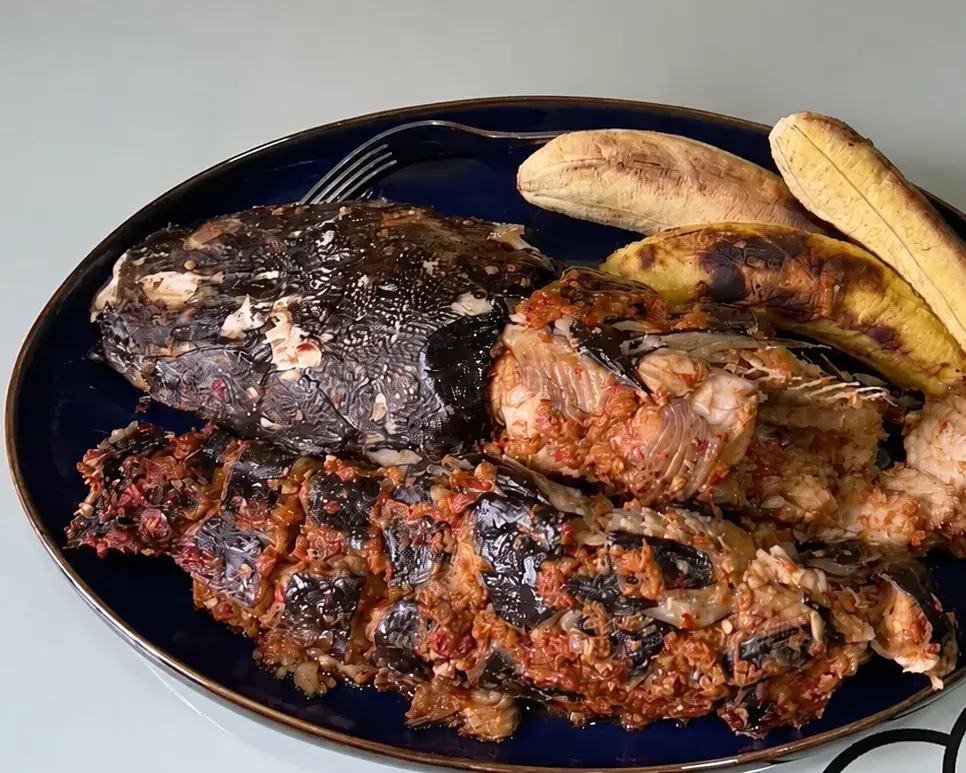
Oily fish: Mackerel, Sardines, Morue and Catfish (Poisson fume)

Oily fish are not only tasty but are highly nutritious. They are top choices for omega-3 fatty acids, which are strong anti-inflammatory compounds. They directly inhibit pro-inflammatory eicosanoids, reduce CRP and IL-6, and lower joint swelling. A recent study published in the American College of Rheumatology reported that consuming oily fish at least twice a week can help reduce RA disease activity and severity.
Red Palm Fruit & Oil (Noix de palme / huile rouge)

Red Palm oil or palm nuts are used in several traditional dishes in Cameroon, such as Koki, pomme pile, okok, Yellow soup and Banga soup. Unrefined red palm oil is extraordinarily rich in tocotrienols, a superior form of vitamin E and beta-carotene (provitamin A). Tocotrienol-rich fractions (TRF) have strong anti-inflammatory properties, reducing inflammatory biomarkers such as Interleukin-6, TNF-α, and C-reactive protein (CRP), which contribute to joint damage. Vitamin E is also essential for bone health and for improving bone mineral density, while Provitamin A modulates immune cell function and reduces TNF-alpha production.
Ginger (Zingiber officinale / gingembre)

Fresh ginger root contains gingerols and their dehydration products, which reduce inflammation partially like modern arthritis drugs, without gastrointestinal (GI) damage. Three comparative studies show that ginger extracts and ibuprofen have the same effect on knee OA, with ginger showing superior GI tolerability.
Tip: drying or lightly cooking ginger converts gingerols into more potent shogaols. Adding it to hot palm oil or stews during the cooking process maximises bioactive extraction.
Fermented cassava foods (Bobolo and Miyondo)

Practically everything pairs well with Bobolo and Miyondo, with their mild taste, chewy texture and sweet fermented aroma. Bobolo and Miyondo are made from fermented cassava. Fermented foods are important components of RA diets. They are rich in probiotics that encourage the flourishing of beneficial bacteria such as Lactobacillus. High intake of fermented foods also reduces notable inflammation proteins, reducing joint pains in RA.
5. Bitter Leaf / Ndole (Vernonia amygdalina)

The key ingredient in ndole, Cameroon's national dish, is Vernonia amygdalina, locally known as bitter leaf. Beyond its cultural significance, it contains bioactive compounds with documented anti-inflammatory properties. The leaves are also exceptionally rich in vitamin K1 (phylloquinone), which protects cartilage against calcification and degeneration. Combined with groundnuts (rich in omega-6) and fish in traditional ndole, the dish has an intrinsically anti-inflammatory composition.
6. Moringa (Moringa oleifera / Neverdié)

Moringa oleifera, known locally as Neverdié for its drought resistance, has one of the highest known concentrations of anti-inflammatory phytonutrients of any food plant. Its leaves contain isothiocyanates, quercetin, and kaempferol that potentially inhibit inflammatory pathways. In a 2016 clinical pilot study, moringa leaf powder (4g/day) reduced CRP by 22% and improved joint mobility in OA patients over 12 weeks.
7. Black-eyed Beans / Cowpeas (Niébé/ koki)

Legumes, particularly black-eyed peas (Vigna unguiculata) and cowpeas, dietary staples across Cameroon, are among the richest sources of soluble and insoluble dietary fibre. This fibre acts as a prebiotic substrate for beneficial gut bacteria (Bifidobacterium, Faecalibacterium prausnitzii, Roseburia), which ferment it into short-chain fatty acids (SCFAs); these SCFAs directly dampen autoimmune inflammation in RA.
8. Folléré / Bissap (Hibiscus sabdariffa)

Folere is vibrant with a tangy, fruity flavour often prepared with pineapple, ginger and cloves for a sweet, aromatic balance. Folléré contains exceptionally high concentrations of delphinidin and cyanidin anthocyanins. These flavonoids may reduce serum uric acid, which is directly relevant for gout prevention and treatment. A recent study confirmed that regular bissap consumption significantly reduces inflammatory markers in patients with metabolic syndrome and arthritic conditions.
Critical note for gout patients: always serve bissap unsweetened; added sugar/fructose raises uric acid and will counteract the beneficial effect of the anthocyanins.
9. Avocado (Avocat)

Avocado is one of the most extensively studied foods specifically for osteoarthritis. Avocado/soybean unsaponifiables (ASU) lipid fractions from avocado and soybean are among the most clinically validated natural supplements for OA with proven scientific evidence. ASU stimulates collagen synthesis, inhibits inflammation and mediates cartilage degradation. Beyond ASU, the whole fruit provides omega-3 fatty acids and vitamin E.
10. Fermented Locust Beans (Dawadawa / Netetou / Soumbala)

Dawadawa, fermented African locust bean (Parkia biglobosa) is a traditional condiment with a pungent flavour used across Cameroon and West Africa to season soups and stews. During natural fermentation by Bacillus subtilis and related species, the beans become a rich probiotic food. The live Bacillus microorganisms modulate the gut microbiome composition, while the fermentation process generates short-chain fatty acids (SCFAs). Both reduce systemic inflammation relevant to RA.
Sources
Altman RD, Marcussen KC.. Effects of a ginger extract on knee pain in patients with osteoarthritis. Arthritis & Rheumatism, 2001. [Full text]
Arthritis Foundation. Anti-Inflammatory Diet for Arthritis. arthritis.org, 2023. [Full text]
Bartels EM. et al.. Efficacy and safety of ginger in osteoarthritis patients: a meta-analysis of randomised placebo-controlled trials. Osteoarthritis and Cartilage, 2015. [Full text]
Calder PC.. Omega-3 fatty acids and inflammatory processes: from molecules to man. Biochemical Society Transactions, 2017. [Full text]
Christensen, Robin, et al. "Symptomatic efficacy of avocado–soybean unsaponifiables (ASU) in osteoarthritis (OA) patients: a meta-analysis of randomised controlled trials." Osteoarthritis and cartilage, 2008 Full text
Fahmi, Zena Munther. "Potential healing effects of Hibiscus sabdariffa L. flowers on arthritis." Int J Pharm Pharm Sci 7 (2014) Full text
Mahdi, Harith Jameel, et al. "In vivo anti-arthritic and anti-nociceptive effects of ethanol extract of Moringa oleifera leaves on complete Freund's adjuvant (CFA)-induced arthritis in rats." Integrative medicine research 7.12018 Full text
Maheu, Emmanuel, et al. "Symptomatic efficacy of avocado/soybean unsaponifiables in the treatment of osteoarthritis of the knee and hip: a prospective, randomised, double‐blind, placebo‐controlled, multicenter clinical trial with a six‐month treatment period and a two‐month followup demonstrating a persistent effect." Arthritis & Rheumatism: Official Journal of the American College of Rheumatology,1998. Full text
NCT06881966. Effect of Omega-3 Fatty Acids in Patients with Rheumatoid Arthritis. ClinicalTrials.gov, 2025-2026. [Full text]
Proudman, Susanna M., et al. "Fish oil in recent onset rheumatoid arthritis: a randomised, double-blind controlled trial within algorithm-based drug use." Annals of the rheumatic diseases, 2015 full text
Sellam J., Czernichow S.. Arthrose, arthrite: je me soigne en mangeant. Editions Solar, Sorbonne, 2024. [Full text]
Tan J. et al.. The role of short-chain fatty acids in health and disease. Advances in Immunology, 2014. [Full text]
WHO. Musculoskeletal Conditions Fact Sheet. WHO Geneva, 2022. [Full text]


Comments